Interdisciplinary education
Bring together students and researchers from law, computer science, IT and business through joint courses, seminars, student projects and cross-faculty initiatives



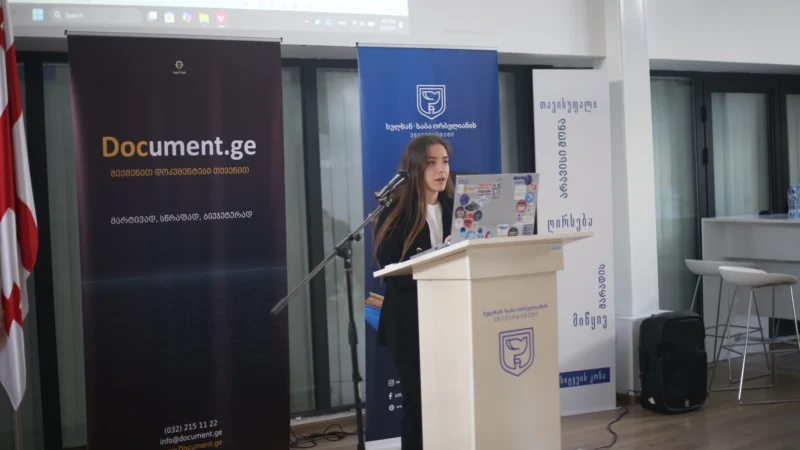
 Launched within the framework of the UCBP, with the support of the U.S. Embassy Tbilisi.
Lab status: active4 Projects8 Focus areas2 Partner institutions1 Course launched
An interdisciplinary laboratory for law, technology and business
The LegalTech Lab is a research, educational and clinical initiative where law, computer science and business faculties work on the same problems: the digital transformation of legal processes, justice systems and organisational workflows.
The LegalTech Lab is a research, educational and clinical initiative where law, computer science and business faculties work on the same problems: the digital transformation of legal processes, justice systems and organisational workflows
The Lab works across eight connected lines of activity, from interdisciplinary teaching to applied research and clinical deployment.
Bring together students and researchers from law, computer science, IT and business through joint courses, seminars, student projects and cross-faculty initiatives
Provide a platform for cooperation between universities and faculties through joint educational activities and other initiatives
Connect academic learning with real corporate processes through practical projects, experimentation and development of LegalTech prototypes
Develop practical LegalTech skills among lawyers and researchers, including technology literacy for legal professionals and legal literacy for tech specialists
Support research in areas such as legal engineering, legal operations, AI in legal practice and computational law
Promote responsible use of technology, including privacy, data protection, cybersecurity and professional ethics
Publish research, educational materials, practical guides, workflow documentation and case studies
Work with universities, practitioners, organisations and other partners to identify and address practical challenges through legal and tech solutions
Courses, teaching infrastructure and research repositories built with partner universities and faculties.
All projects
A master’s-level course launched in 2025 that gives law students working technical literacy and assesses them by building tools rather than writing essays.
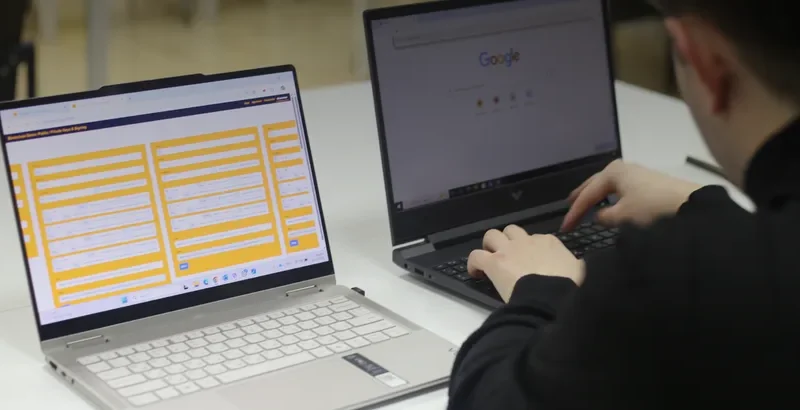
The first blockchain simulator used in Georgian legal education: students execute and inspect simulated smart-contract transactions rather than reading about them.
Course capstones in which students build working document-assembly tools - decision trees, conditional logic, clause libraries and risk flags - for contracts they will actually draft.
Students systematise non-US AI litigation - deepfakes, copyright, employment, privilege - by legal question, working toward a handbook for courts and practitioners.
Interactive teaching tools used in class. Open one, change something, and watch what the mechanism actually does.
All toolsBuild a chain, tamper with a block, and watch everything after it become invalid. The mechanism is visible rather than described.
Sign a message, verify the signature, then change one character and watch verification fail. What a signature actually proves, shown rather than asserted.
Students turn a contract into executable logic: a decision tree, conditional branching, validation rules, a clause library and risk flags. Making a contract explicit enough for a machine to assemble is one of the most demanding exercises in legal analysis there is.
Illustrative example of the logic students produce, not live system output.
News
A partner article describes how the Lab was set up by Sulkhan-Saba Orbeliani University and Document.ge within the University Capacity Building Program, and the tools it…
The Lab now has a public home for its statute, projects, publications and news - and an open invitation to partner institutions.
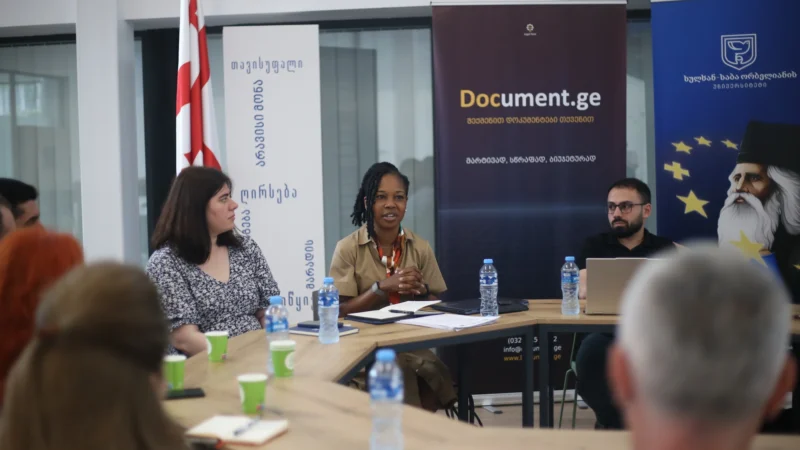
A week of workshops with visiting faculty and partner universities on integrating technology into legal education and building interdisciplinary programmes.
Blog
The director of the European AI Office has described a supervisory practice that asks more of providers than the enforceable text alone requires.
The Third Circuit has affirmed that ROSS Intelligence infringed copyright by using 2,243 Westlaw headnotes to train its AI legal search engine, and that the use…
The AI Board met on 17 September 2026 and placed market surveillance, conformity assessment and the transparency duties in force since 2 August at the centre…
The Lab operates as an open, inter-institutional consortium. Partnerships are formalised through memoranda of understanding, cooperation agreements and clinical hosting arrangements.
We welcome partner universities, faculties, research institutes, legal clinics, firms and public bodies interested in joint teaching, research or supervised student projects.